Gujarati matrimony in New Zealand
Gujaratis have been in New Zealand longer than almost any other Indian community, and a Gujarati rishta here is often a meeting of two very different histories: a family whose great-grandfather grew potatoes at Pukekohe, and a family that landed at Auckland Airport last year. This page is for both.
Open in New Zealand today. Every profile is ID-checked before anyone can see it. Page updated .
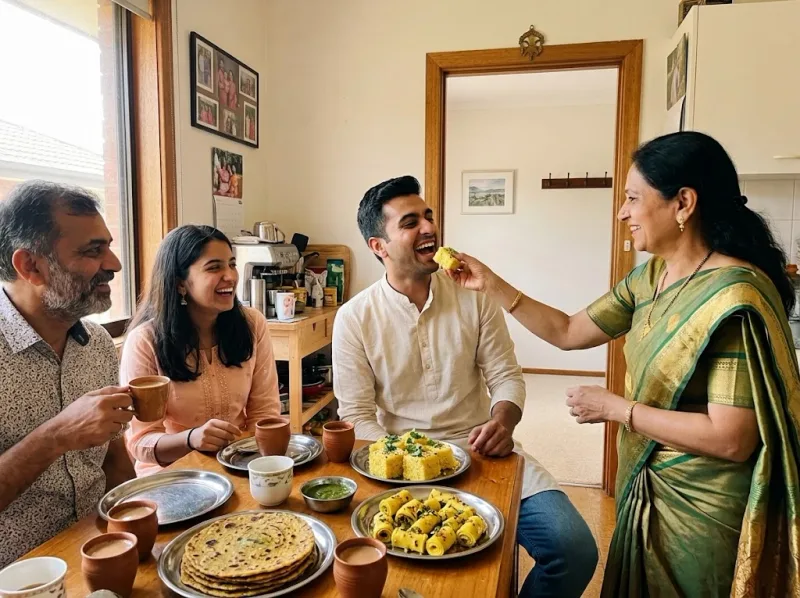
The oldest Indian story in New Zealand is a Gujarati one
The first wave of Indian migration to New Zealand, in the late 1800s and early 1900s, was made up mostly of young Punjabi and Gujarati men. The Gujaratis went into market gardening and shopkeeping. After 1921, when the law made it easier to own a shop, a generation of Gujarati families became the dairy owners and fruiterers of small-town New Zealand, and the market gardeners of Pukekohe, south of Auckland, were overwhelmingly Gujarati. The Auckland Indian Association, founded in the 1920s, is still run largely by their descendants; the Wellington Indian Association runs one of the capital’s temples.
That community is now into its fourth and fifth generation, speaks English at home as often as Gujarati, and is spread through Mt Roskill, Sandringham and Balmoral in Auckland, through Wellington and the Hutt, and through the towns where the family shop once was.
Alongside it is a much newer community: engineers, accountants, nurses and IT workers from Ahmedabad, Surat, Vadodara and Rajkot who arrived on skilled visas in the last fifteen years and settled where the newer suburbs are, in Flat Bush, Albany and the west of Auckland, and in Hamilton and Christchurch.
Two Gujarati communities, one search
A matrimonial site built for India assumes everyone is the second kind. Families of the first kind find themselves answering questions about caste certificates and native villages they have not visited in eighty years. Families of the second kind find themselves matched with people in Gujarat when they were hoping for someone in Auckland.
On Rishta the things that separate the two are plain fields, so each family can search for what it wants:
- Residency status: citizen, permanent resident, or a visa, on every profile.
- Family origin: India, New Zealand, Australia or elsewhere, with the native place in your own words, so a family that came by way of East Africa or Fiji is not filed under the wrong story.
- Mother tongue: Gujarati, English or any other, as a field and a filter.
- Diet: a field and a filter, which for many Gujarati families is the first question.
- Community: yours to state, to filter by, or to leave as no preference; the choice is private.
And the questions that neither kind of family wants asked in public are not asked in public. There is no gallery. Photos are private until she approves one particular person, contact details are never shown, and every profile has been ID-checked and read by a person before anyone can see it.
Where the community gathers
Gujarati religious life in New Zealand runs through the Swaminarayan mandirs as much as anywhere: the BAPS Shri Swaminarayan Mandir in Avondale, Auckland, with others in Pukete in Hamilton, Taita in Lower Hutt, and Papanui in Christchurch, the only Hindu temple in the South Island. The Bhartiya Mandir on Balmoral Road, the oldest and largest Hindu temple in the country, is where many of the older Auckland families worship. Navratri, with its nine nights of garba, is the event of the year, and the one where more rishtas have begun than at any website.
What happens after a match
An interest on Rishta carries a personal message, so none can be sent in bulk. If she accepts, both see each other’s photos and can message and call inside the site, with no number handed over until someone wants to. Families can be involved from the start: a parent can make and manage the profile, relatives who are not members can see a Family View page, and a matchmaker can speak to the family with the member’s consent.
When it comes to the wedding, registering a marriage in New Zealand explains the licence and how a temple ceremony becomes the legal marriage, and if the match is in Gujarat, the culturally arranged marriage visa is the visa Immigration New Zealand designed for exactly this.
Gujarati matrimony on both sides of the Tasman
The same site serves Hindu families across New Zealand and the Indian community in Australia, and a search can cover both countries. Joining is free until 31 December 2026 for everyone who joins now.
Questions before you join
Can I search for vegetarian only?
Can we ask for our own community?
Does the profile say which language the family speaks at home?
Our family has been here since the 1920s. Will we be matched with recent migrants?
What about Australia?
What does it cost?
Also in New Zealand
- Indian matrimony in New Zealand
- Punjabi matrimony in New Zealand
- Sikh matrimony in New Zealand
- Hindu matrimony in New Zealand
- Tamil matrimony in New Zealand
- Telugu matrimony in New Zealand
- Malayali matrimony in New Zealand
- Muslim matrimony in New Zealand
- Indian Christian matrimony in New Zealand
- Fiji Indian matrimony in New Zealand
Join Rishta in New Zealand
Join now and it’s free until 31 December 2026. After that, Search is $39 a month or $99 for 3 months, the same for women and men.