The Prospective Marriage visa: how an arranged marriage gets to Australia
Australia’s Prospective Marriage visa (subclass 300), explained for families arranging a marriage: who qualifies, the rule that you must have met in person, the sponsor, what it costs, how long it lasts, and the Partner visa that follows the wedding.
By the Rishta team· Published · 8 min read
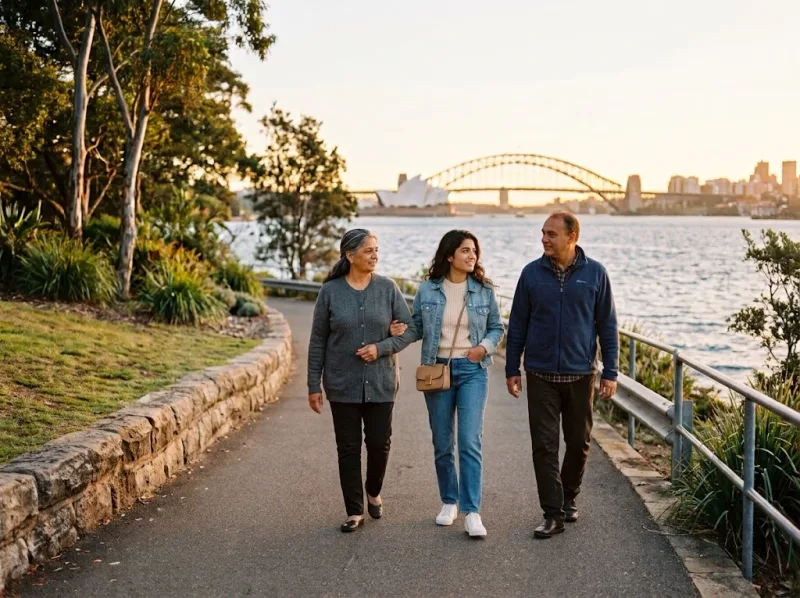
When a match for someone in Australia is found in India, Fiji, Sri Lanka or anywhere else, the practical question arrives before the engagement does: how does the other person get here? Australia’s answer for a couple who are not yet married is the Prospective Marriage visa, subclass 300, sometimes called the fiancé visa. It was not designed with arranged marriages in mind, but it fits them well, with one condition that families arranging from a distance must plan for.
This is a plain-English guide to the rules as published by the Department of Home Affairs in October 2026. Rules and fees change; check the current page before you apply, and for anything complicated use a registered migration agent or a lawyer.
Who it is for
Someone outside Australia who intends to marry an Australian citizen, permanent resident or eligible New Zealand citizen, and who wants to come here to do it. The visa lets the person come to Australia, marry within the visa period, and then apply for a Partner visa from inside the country without leaving.
It is not for a couple who are already married; they apply for the Partner visa directly, from overseas. And it is not for a couple who want to marry overseas and then move; that too is the Partner visa route.
The conditions, in Home Affairs’ own words
You must:
- be 18 years old or older;
- have a sponsor who is an Australian citizen, permanent resident or eligible New Zealand citizen;
- intend to marry your prospective spouse before the visa period ends;
- have met your prospective spouse face to face as adults since turning 18, and are known to each other personally at the time you apply;
- be outside Australia when you apply, along with any family who apply with you.
The fourth condition is the one that matters for an arranged marriage. A match arranged by the families and conducted entirely by video is not enough: the two of you must have met in person, as adults, before the application goes in. Families arranging from Australia should plan that meeting, a trip to India or a visitor visa for the other person, before the engagement, not after.
How long, and how much
The visa allows a stay of 9 to 15 months from the date it is granted, and the wedding must happen inside that window. The cost is from AUD 11,710, plus the Partner visa afterwards, which is a separate application with its own fee; between them they are among the most expensive visas Australia issues, and families should budget for both from the start. Home Affairs warns that applicants may experience longer processing times than expected and publishes a guide to recent times; applications are processed according to the government’s family visa priorities, and a year is not unusual.
On the visa you can work and study, which matters: most people arrive, marry and start working while the Partner visa is processed.
What has to be shown
Home Affairs wants to see a real relationship and a real intention to marry. For an arranged marriage done properly that evidence already exists:
- That you have met in person: passport stamps, tickets, photographs of the meeting, the engagement.
- That you are known to each other personally: the history of the relationship, the families’ involvement, the communication since you met.
- That you intend to marry within the visa period: usually a letter from an authorised marriage celebrant in Australia confirming a wedding is planned, which is where the Notice of Intended Marriage comes in; see our guide to registering a marriage in Australia.
- The sponsor’s side: the sponsor’s status, their own documents, and police checks, since Australia now checks sponsors as well as applicants.
- Health and character: medical examinations and police certificates from every country lived in for a year or more since turning 16.
Keep everything from the first introduction: who introduced whom, when, the family calls, the meeting, the engagement. Families who treated the arrangement as a formal process have an easy application; families who did everything by phone and remembered nothing have a hard one.
After the wedding
Once married, and before the Prospective Marriage visa expires, the person applies from inside Australia for the Partner visa, which is granted in two stages: a temporary visa first, and the permanent one usually about two years after the application was made, once the relationship is shown to be continuing. Living together from the wedding, a shared address, shared finances, the families’ knowledge of the marriage: that is what the second stage is judged on. The months on the Prospective Marriage visa are not a holiday; they are the start of the evidence.
Where a matrimonial site fits
Home Affairs wants to see that the two of you met in person as adults, know each other, and intend to marry here. A match found on Rishta gives the families a record of how the rishta was arranged, the conversations and the families’ involvement, and the meeting in person is yours to plan before the application. If the match is already in Australia, none of this applies and the only paperwork is the marriage itself.
This guide describes the published rules as at October 2026 and is not migration advice. Check immi.homeaffairs.gov.au for the current conditions and fee, and talk to a registered migration agent about your own situation.